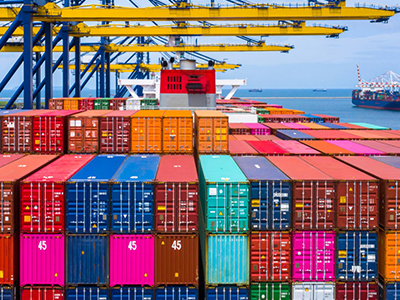
Structured Inventory Finance enables businesses to fund their inventory of tradeable commodities prior to it being sold. It enables businesses to purchase inventory without using upfront cash. The inventory itself serves as collateral.

Structured Inventory Finance supports commodity traders who purchase large volumes from producers and supply buyers over time. Instead of relying solely on the trader’s balance sheet, the financing is structured around the underlying inventory itself.
Teybridge structures transactions using inventory control arrangements, storage agreements, and the movement of commodities through the supply chain. This allows traders to finance inventory holdings and execute larger transactions while maintaining disciplined risk control.
Enable traders to purchase large annual production volumes from producers and supply buyers consistently throughout the year while aligning financing with the trade cycle.
Grows or produces the commodity
Purchases commodities and manages storage and delivery
Funding structured around the underlying inventory
Receives commodities on a regular supply cycle
Structured inventory finance may be appropriate where a business has identifiable and marketable inventory, effective inventory controls, and a repayment path linked to the sale of the inventory.
Finance significant commodity purchases during harvest or production periods.
Hold commodities in controlled storage before phased delivery to the buyer.
Support financing secured by commodity inventories held in approved storage facilities.
Align funding and repayment with the gradual sale and monetisation of inventory.
Agricultural commodities such as grain, sugar, or rice may be produced and harvested once per year, while buyers require consistent monthly supply throughout the year.
A trader may purchase the full annual production from the producer and store the commodity, delivering fixed quantities to the buyer every month. Structured Trade Finance enables the trader to fund the initial purchase while aligning repayment with the ongoing delivery cycle.
Financing is only advanced to counterparties and off-takers which have demonstrated a track record of execution and strong credit quality.
We reduce concentration risk by spreading exposure across different commodities, counterparties, buyers, geographies, and transaction cycles, so no single trade or commodity position dominates the overall portfolio.
Collateral management, monitoring and inspection are pre-requisite functions that we consider necessary to ensure that the security of physical commodities is maintained at all times.
Insurance, backed by first-class insurers, protects securities against specific and general perils.
If your business purchases, stores or delivers commodities against identified buyers or contractual supply arrangements, speak with our team about a structured inventory finance solution aligned with your transaction cycle.
Contact the teamAnswers to common questions from commodity traders considering inventory-backed finance.
South Africa
7th Floor Letterstedt House
cnr Main and Campground Rd
Newlands
7700
Cape Town
+ 27 21 657 4999
PO Box 44911,
Claremont,
7735
Mauritius
3rd Floor
Black River Business Park
99 Royal Rd
La Mivoie
Black River
+230 460 9404